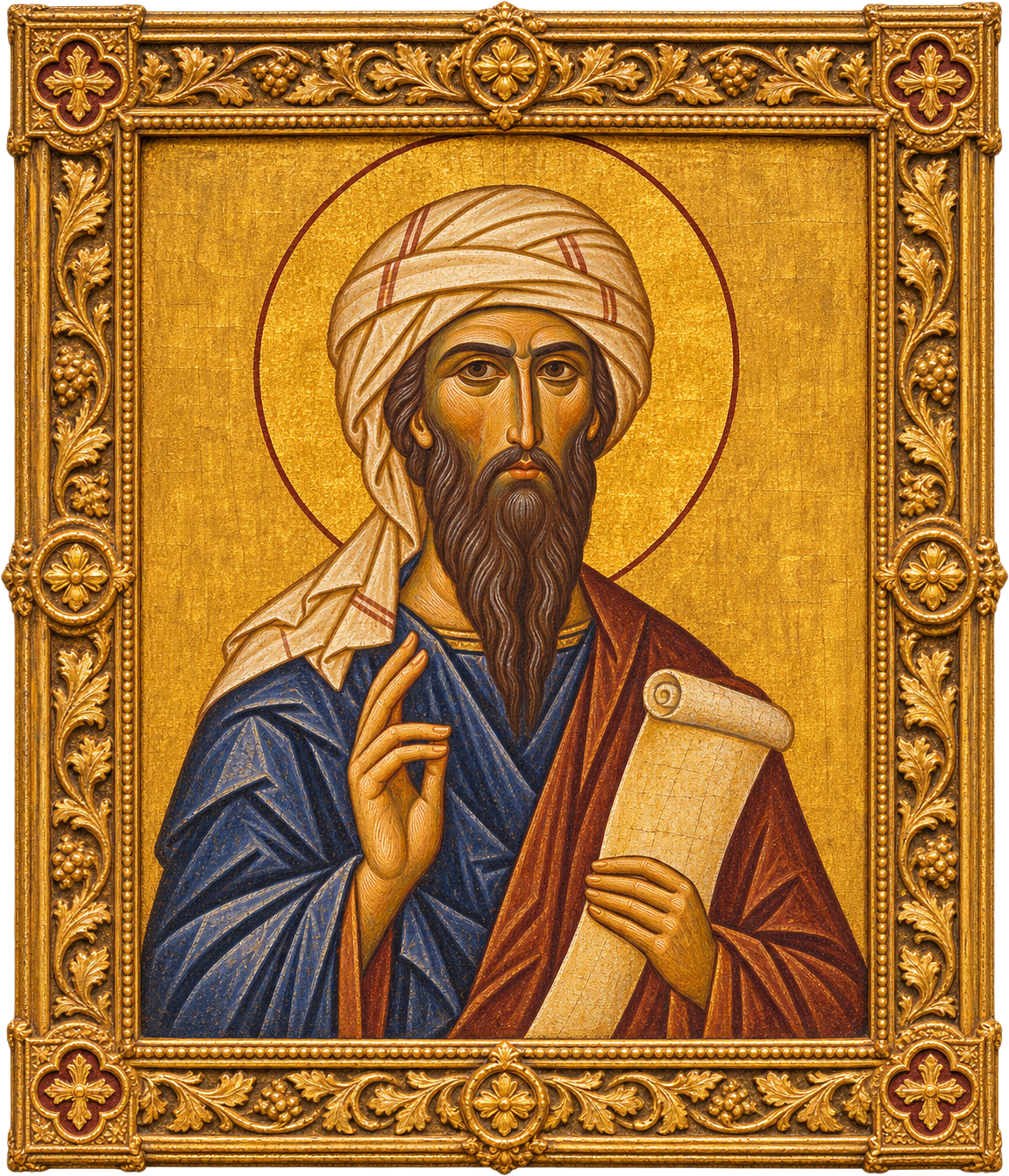
John of
Damascus
c. 675–c. 749
Life
John of Damascus (John Damascene) was the last of the major Greek Church Fathers, living in the late seventh and early eighth centuries. Born into a prominent Christian family in Damascus that served in the Umayyad administration, he was the most important Christian writer under early Islamic rule and became a monk at the monastery of Mar Saba near Jerusalem. John was a strong defender of the veneration of icons during the first wave of Byzantine iconoclasm and produced the classic theological justification for images. His great systematic work, The Fountain of Knowledge, includes a summary of philosophy, a catalogue of heresies, and a comprehensive exposition of orthodox faith that became a standard textbook in the East. He was also a gifted hymnographer whose liturgical poetry remains in use. John synthesized and clarified the earlier patristic tradition rather than breaking new speculative ground, and he is regarded as a Doctor of the Church in both East and West.
Selected Writings
- The Fountain of Knowledge – comprising the Dialectica, On Heresies, and Exact Exposition of the Orthodox Faith
- Three Apologies Against Those Who Attack the Holy Images
- Extensive liturgical poetry and canons, including the Canon of Pascha and other well-known hymns
- Various sermons, biblical commentaries, and smaller theological treatises

