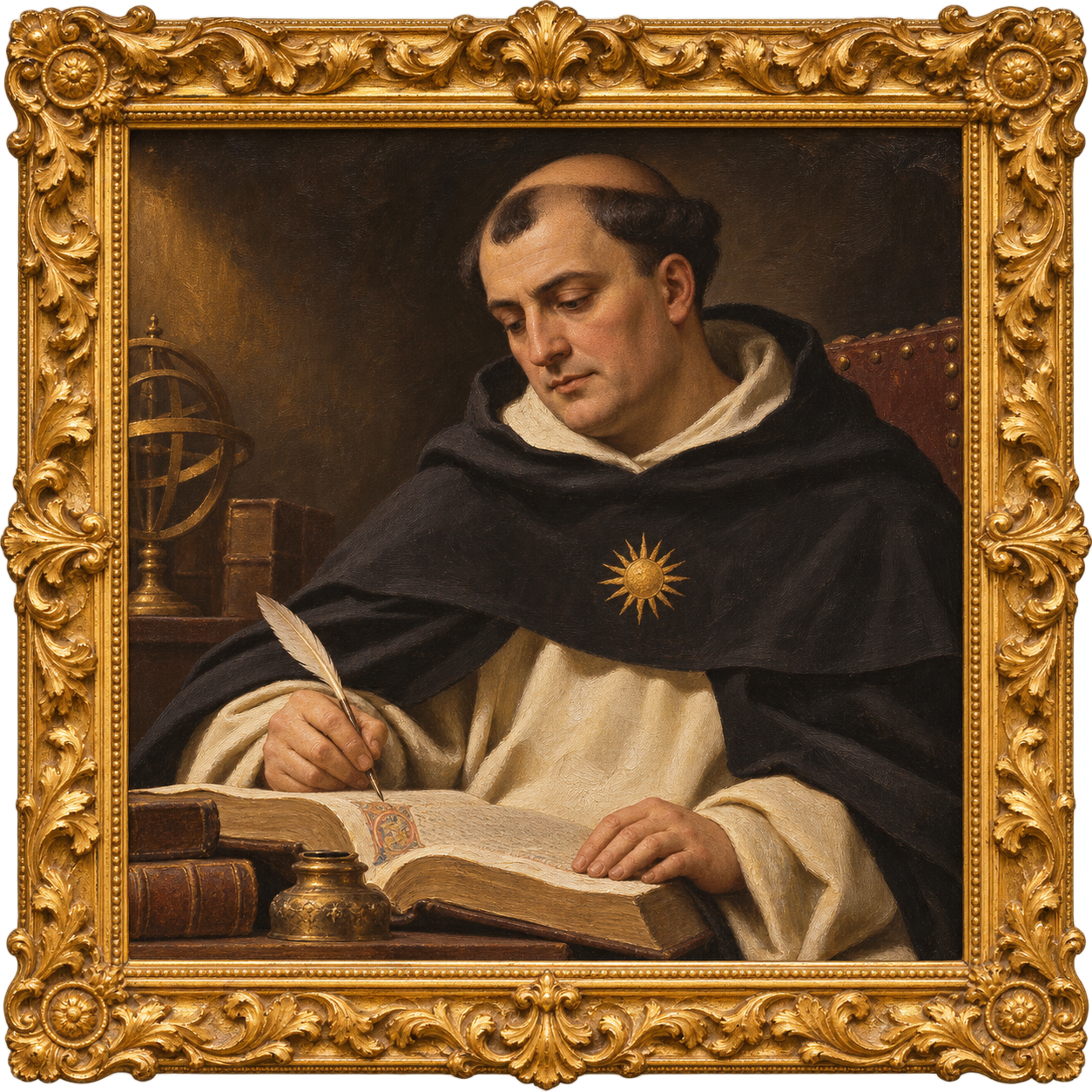
Thomas Aquinas
c. 1225–1274
Life
Thomas Aquinas (thirteenth century) was the most influential theologian and philosopher of the medieval Western church and the classic representative of high scholasticism. Born into a noble family in southern Italy, he entered the Dominican order against his family’s wishes and studied under Albert the Great. He taught in Paris and in Italy, producing a vast body of work that systematically integrated Aristotelian philosophy with Christian doctrine. His mature thought is marked by clarity, balance, and a comprehensive vision of God, creation, grace, and the moral life. The Summa Theologiae, left unfinished at his death, became the most important theological textbook of later Christian tradition. He was canonized in 1323 and declared a Doctor of the Church.
Selected Writings
- Summa Theologiae
- Summa contra Gentiles
- Commentaries on Aristotle, on the Sentences of Peter Lombard, and on various books of Scripture
- Disputed questions (De Veritate, De Potentia, De Malo, etc.)
- Compendium of Theology
- Liturgical poetry, including the Office of Corpus Christi
- Many shorter treatises and letters

