← Nicene & Post-Nicene Hall
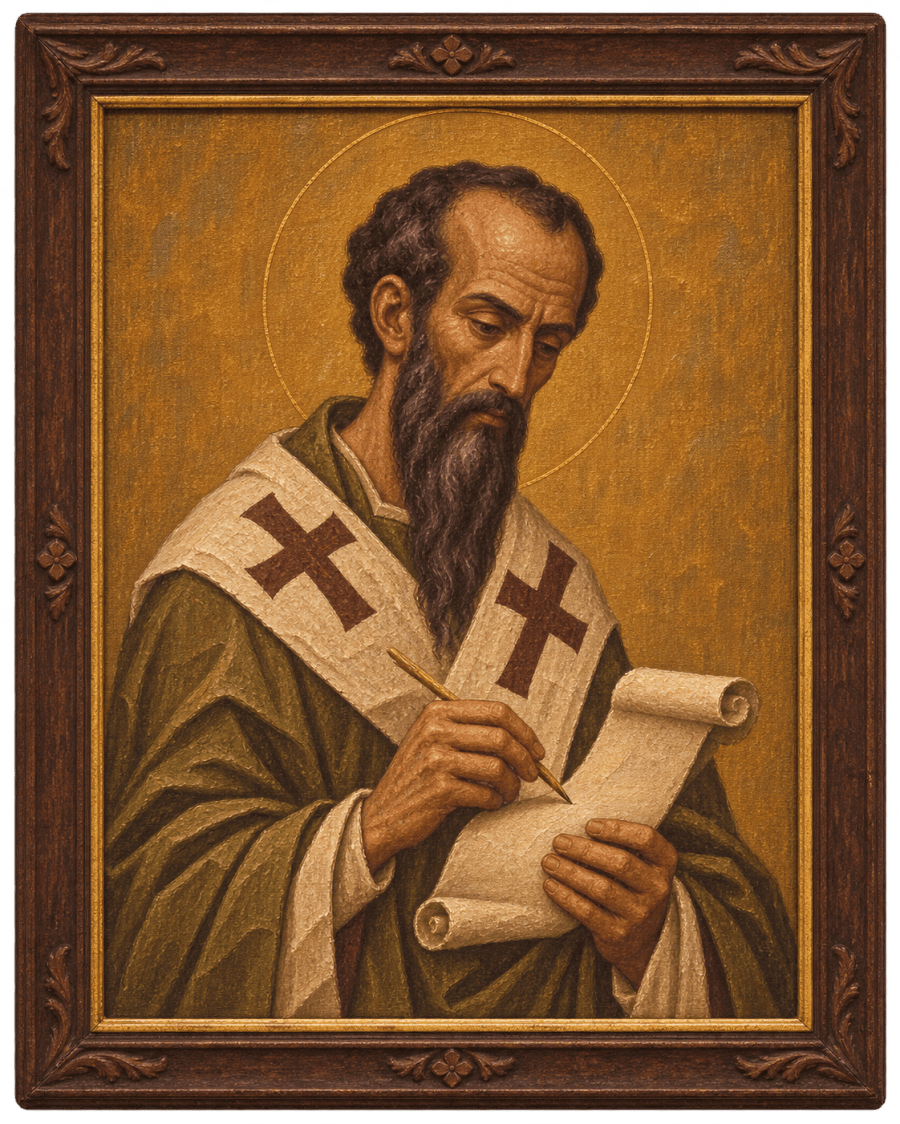
Basil of Caesarea
c. 330–379
Life
Basil the Great was a fourth-century bishop of Caesarea in Cappadocia and is one of the three Cappadocian Fathers. Born into a prominent Christian family, he received a classical education in Constantinople and Athens, and then he organized monastic communities in Pontus and later wrote rules that became foundational for Eastern monasticism. As bishop from AD 370, he worked tirelessly to defend the Nicene faith against Arian and semi-Arian pressures, to reform the clergy, and to care for the poor (founding a large charitable complex known as the Basiliad) until he died relatively young in AD 379. His treatise On the Holy Spirit was a decisive contribution to the full affirmation of the Holy Spirit’s divinity.
Selected Writings
- On the Holy Spirit
- Against Eunomius
- The Longer and Shorter Rules (Asceticon) for monastic life
- Extensive collection of letters (hundreds survive)
- Homilies on the Hexaemeron (the six days of creation) and on the Psalms, and various other sermons
- A liturgy traditionally attributed to him (the Liturgy of St. Basil) still used in Eastern churches

